
The Disillusionment Stage of Marriage: Why Most Couples Quit Right Before It Gets Good
Most couples don't end because they stop loving each other.
They end because they hit a wall they didn't know was coming, and nobody told them it was supposed to be there. They mistake a normal, predictable, universal stage of long-term love for evidence that something has gone fundamentally wrong with their partner, with their marriage, or with themselves for choosing this person in the first place.
That wall has a name: disillusionment.
And if you're in it right now, if the person you married feels more like a roommate you're managing than the person you fell in love with, if you're cycling through the same arguments with no end in sight, if you've quietly started wondering whether this is just what marriage is, I need you to know something: that's not a sign to get out. That's a sign you've arrived at the part that actually matters.

What Is the Disillusionment Stage of a Relationship?
Every long-term relationship goes through a predictable arc. It's not a mystery. It's not a personal failing. It's just what happens when two humans, both carrying decades of unresolved history, decide to build a life together.
In Relational Life Therapy (RLT), we understand relationships as moving through three recurring phases: Harmony, Disharmony, and Repair. These three stages don't just describe the overall lifespan of a relationship, they describe every single interaction you have. But more on that in a minute.
At the macro level most relationships start in Harmony. This is the stage most people know. The falling-in-love stage. The "I've never felt this way about anyone" stage. The neurochemical cocktail of early romance that makes your partner seem like the most interesting, attractive, right person on the planet. Everything is new. You're putting your best foot forward. The irritating habits haven't surfaced yet (or if they have, they're adorable). The unspoken expectations haven't collided yet. You're not in a relationship — you're in a fantasy about a relationship.
Then life shows up. The fantasy collides with reality. The honeymoon ends. And without warning, you're in Disharmony.
This is the disillusionment stage. And it hits almost everyone, usually somewhere between two and seven years in though it can surface earlier or later depending on how quickly the stressors pile up. Kids. Finances. Careers. Loss. Competing needs. Incompatible expectations about who does what, who earns what, who carries the emotional weight of the household. All the things you never fully talked about because you were too busy being in love.
Why Disillusionment Feels Like the End (When It's Actually the Middle)
The reason so many people interpret disillusionment as evidence that the relationship is over is that it genuinely hurts like an ending. The warmth feels gone. The ease is gone. You're exhausted in ways you didn't expect, and your partner who was once the person who made everything feel easier now sometimes feels like the source of the exhaustion.
It can feel like: I picked wrong. This isn't who I thought they were. Maybe we've just grown apart.
But here's what I'd push back on. You haven't grown apart. You've just stopped performing for each other. What you're seeing now is the real, unedited, un-honeymoon-filtered version of who your partner is and who you are. That's not a reason to leave. That's a reason to actually learn how to be in a relationship.
The romantic stage wasn't love, not really. It was infatuation. Real love, the kind that lasts, gets built in Disharmony and Repair.
The couples who make it aren't the ones who stayed in Harmony the longest. They're the ones who learned what to do when they weren't.The Moment Everything Goes Sideways
You know the moment. Your partner says something. Maybe it’s a tone. Maybe it’s a particular word they always use. Maybe it’s a look you’ve seen a thousand times and it never gets less loaded.
And then, before you’ve even registered what happened, you’re somewhere else entirely. You’re defending yourself. You’re shutting down. You’re saying something you’ll regret, or you’re going very quiet in a way that communicates everything.
In Relational Life Therapy, this is sometimes called “the whoosh.” That automatic nervous system response that happens faster than conscious thought. Your brain interprets a cue, a tone, a facial expression, a pattern it’s recognized before, and your body responds as if there’s a threat. Defenses go up. The rational, caring, we’ve-talked-about-this-in-therapy part of you goes offline. And something older and more defended takes the wheel.
The whoosh doesn’t make you a bad partner. It makes you human. Your nervous system is doing exactly what it was designed to do. Protect you.
The problem is that it’s usually working from old data.
The Cycle Runs on Repeat: Micro-Level Harmony, Disharmony, and Repair
Here's where it gets really useful.
This same three-phase cycle Harmony, Disharmony, Repair isn't just the macro arc of your relationship. It's the template for every single conversation, every disagreement, every moment of disconnection you experience. Every day.
Harmony: you're connected. Things are easy. You're laughing, collaborating, on the same team.
Disharmony: something shifts. Maybe it's a comment that landed wrong. A plan that fell apart. A need that wasn't met. A tone of voice that triggered something old. Something breaks the connection, and suddenly you're not on the same team anymore you're in opposing corners.
Repair: someone moves toward the other. Not to win, not to be proven right, but to restore the connection.
Most people experience conflict like a bomb going off something that either detonates the whole relationship or gets avoided at all costs. But most relational conflict isn't a bomb. It's a flare-up. The house didn't burn down. There's still something good here. The question is whether you put the fire out and repair the damage, or let small fires accumulate until the structure can't hold anymore. That's usually what resentment actually is not one big catastrophic event, but dozens of small fires nobody tended to.
This is the micro-cycle. And it runs dozens of times a day in close relationships, most of them so small we barely notice. The minor irritation at breakfast that gets metabolized by a genuine "how are you?" at lunch. The sharp comment followed by a soft "I'm sorry, that came out wrong." The moment of distance followed by a hand on a shoulder.
The couples who thrive aren't the ones who avoid Disharmony. They're the ones who move through it quickly because they've built the muscle of repair.
And the couples who struggle? They hit Disharmony and either blow it up or shut it down. They fight to win instead of fighting to reconnect. They avoid the conversation entirely and let the distance slowly calcify into resentment. They mistake the phase for the conclusion.
Why Most of Us Were Never Taught This
Most of us grew up in homes that never modeled Repair.
We saw Harmony (when things were good). We saw Disharmony (when things got hard). What many of us never saw was what came next a parent who could say I got that wrong, I'm sorry, I want to understand your experience without it becoming a negotiation, a defense, or a lecture. A parent who could receive hurt without becoming defensive or retaliatory.
So we're walking into adult relationships with a fundamental skill gap. And no amount of love, actual, genuine, deep love makes up for not having those skills. This is one of the "bitter pills" in RLT. A good marriage requires learned skills, not just good intentions. The two people who built a successful company together, who are brilliant at work, who are loving, capable humans, can still absolutely tank a relationship if they never learned how to repair.
I know this one personally. I can have all the clinical knowledge in the world, and I have still had to practice these skills in my own marriage. Knowing what repair looks like and being able to do it when you're activated, hurt, or convinced you're right are very different things.What the Practice Actually Looks Like
If relational mindfulness is a minute-by-minute practice, what does it look like in actual minutes?
A body scan. Your body usually signals the whoosh before your brain catches up. Learn the physical signature of your own activation — tightening chest, shoulders rising, a shift in breathing. Your body is your early warning system.
The one-breath pause. Just one. Between what happened and what you do next. That’s not a long time. It’s often enough.
Cultivating curiosity. Instead of moving straight into reaction, ask: what is actually happening in me right now? Is this about right now, or am I importing something from somewhere else?
The orienting question. “What is this moving us toward?” In any relational moment, this question can help the wise adult orient before the adaptive child acts.
Mantras and anchors. A short phrase that reconnects you to what you actually want. I want to be close to this person. I want to respond from the person I’m trying to be.
A daily mindfulness practice. The skill of noticing is trainable. You build it off the field so you have access to it on the field.
None of this is about performing calm. You are allowed to be upset. Relational mindfulness is not about suppressing the emotional response, it’s about choosing what you do with it. About who you are being, even when it’s hard.
What Gets in the Way: The Two Traps of Disharmony
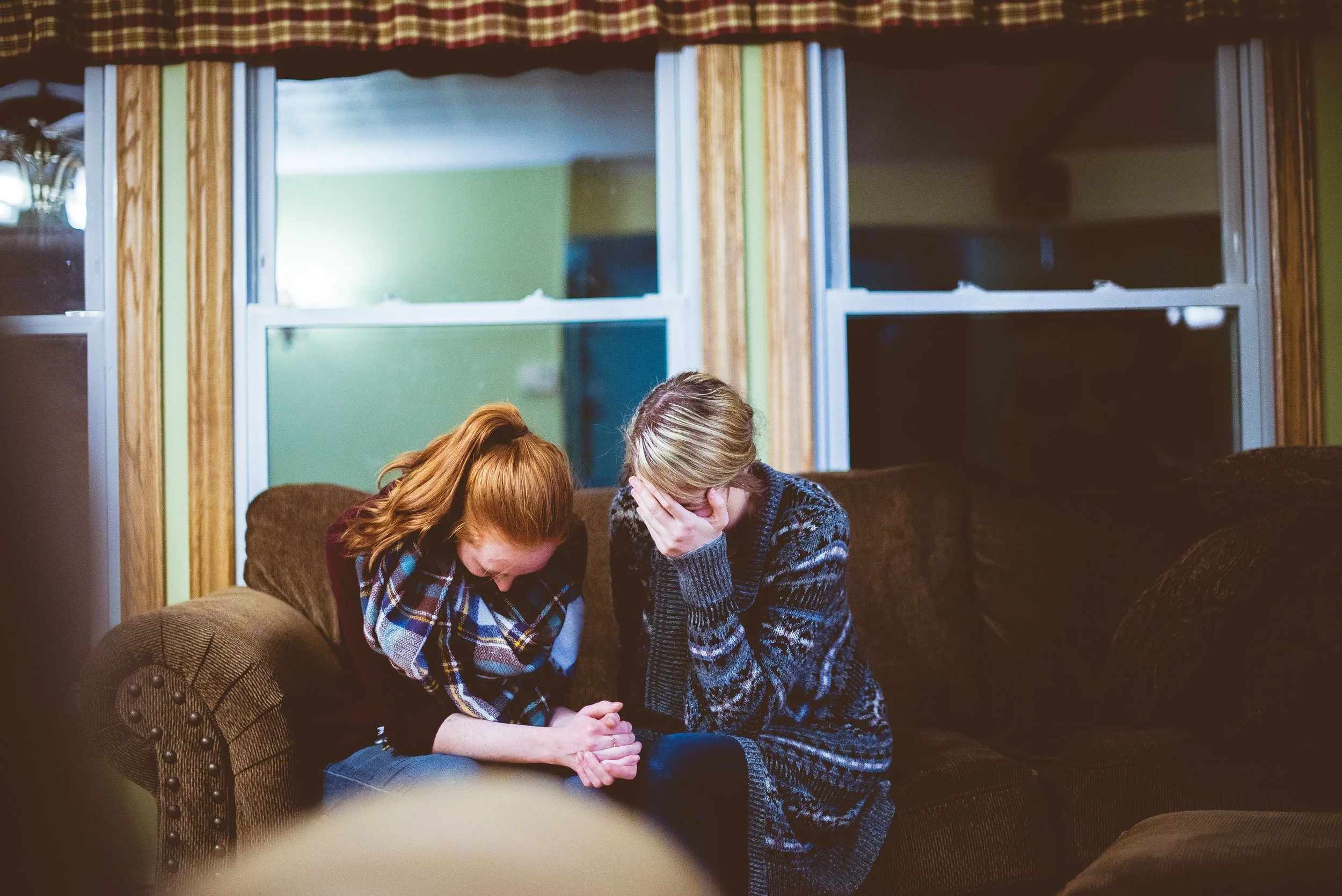
When couples hit disharmony whether it's a single argument or the larger disillusionment of a relationship they tend to fall into one of two traps that make repair nearly impossible.
Trap 1: The Objective Reality Trap. This is what I wrote about in a previous post, and it bears repeating here because it's everywhere in disillusionment. When your partner expresses hurt, frustration, or unmet needs, the instinct is to defend to prove that your version of events is the accurate one. I didn't say it like that. That's not what happened. Actually, here's the data.
But as I've said before: being factually correct and being relationally effective are two completely different things. In Disharmony, optimizing to be right keeps you in Disharmony. It is a losing strategy, not because your perception is wrong, but because it moves you away from your partner's experience instead of toward it.
Trap 2: The Resentment Accumulation Trap. This is the quieter one, and in some ways more dangerous. This is where couples stop repairing the small ruptures, the micro-cycle disharmonies and let them stack. Every unaddressed disagreement, every swallowed hurt, every "it"s fine" that wasn't fine, gets added to a running tab. Eventually the tab is so large that minor incidents carry the weight of years. And what looks like a fight about the dishes is actually a referendum on whether this person has ever truly seen you.
Think of each small conflict like a flare-up in the house. The house didn't burn down. There's still good here, still something worth saving. But small fires that don't get put out and disrepair add up. The damage accumulates quietly, in the walls, in places you can't see, until one day the structure can't hold. Most couples make the mistake of treating conflict like a bomb, something catastrophic and destabilizing that either detonates or doesn't. But most relational conflict isn't a bomb. It's a flare-up. A small fire. Manageable on its own. What makes it dangerous is when you let them stack. Every swallowed hurt, every "it"s fine" that wasn't fine, every moment of disconnection that nobody moved to repair added to a running tab. Eventually the tab is so large that minor incidents carry the weight of years, and what looks like a fight about the dishes is actually a referendum on whether this person has ever truly seen you. Flare-ups are going to happen. That's not the problem. The problem is thinking any one of them means the house is gone or ignoring them until it actually is.
What Repair Actually Requires (And Why It's Worth It)
Repair isn't weakness. Repair isn't capitulation. Repair is a relational skill that gets easier the more you practice it.
In RLT, repair is not a dialogue. It's not, “I’ll say I'm sorry if you admit you were also wrong." It's one partner deciding, I care more about this relationship than I care about winning this moment. It's putting down the objective reality argument, stepping out of your own reactivity, and getting genuinely curious about your partner's inner world.
I'm sorry you're hurting. I don't want you to feel this way. Tell me more about what you're experiencing.
That's it. That's the move. No concession of guilt required. Just the willingness to make your partner feel seen before you make your case.
When your partner feels genuinely understood, their walls come down. Only then do they become capable of actually hearing you. Empathy is the key that unlocks receptivity. By moving toward their experience first, you're not losing ground. You're creating the conditions under which you can finally be heard too.

Getting Through Disillusionment Doesn't Happen By Accident
I've worked with enough couples to know that the disillusionment stage is not self-resolving. You don't just love each other enough and somehow come out the other side. You come out the other side because you both decide to stop treating Disharmony as a verdict and start treating it as information.
Information that says: we've been running the same patterns long enough, they're not working, and it's time to do something different.
In my work with couples, we don't spend years processing feelings without traction. I use a direct, engaged approach, Relational Life Therapy, alongside Brainspotting and Accelerated Resolution Therapy, that gets to the root of what's actually driving the patterns quickly, because you've probably already spent enough time circling the surface. We look at what's happening in real time, what each partner contributes to the cycle, and where it comes from without letting history become a hall pass for present behavior.
I'm also not neutral to a fault. If something's out of balance, I'll say so. If one partner is carrying more than their share of the relational load, we'll name it. And if one or both of you is managing old wounds in ways that are keeping you stuck, we'll address that directly. Because you can't build a new relationship on top of unprocessed pain and expect it to hold.
The good news? Most couples don't need years to feel different. They need the right framework, the right skills, and someone willing to tell them the truth.
Disillusionment Is a Doorway, Not a Dead End
There's a version of your relationship on the other side of this stage that most couples never get to, not because it wasn't possible, but because they didn't know what the disillusionment phase was or what to do with it. They mistook the middle of the story for the ending.
Real intimacy isn't built during Harmony. It's built in the accumulation of Disharmonies that were moved through with honesty, skill, and genuine care for the other person's experience. Every repair, however imperfect, adds a thread to the fabric of the relationship. Over time, those threads become something durable enough to handle whatever comes next.
You don't need to love each other more to get through this. You need to learn a few things you probably weren't taught.
That's what I'm here for.
Ready to stop cycling and start repairing?
I work with individuals and couples in Roseville, CA and online throughout California and Texas, using approaches designed to create real, lasting change not just better conversations for a week. If you're in the disillusionment stage and wondering what comes next, I'd be glad to talk.
Schedule a free 20-minute consultation here.
RLT concepts in this post are drawn from Terry Real’s Relational Life Therapy framework, including The New Rules of Marriage (2007) and Us (2022).
Related Reading:
SIGN UP TO MY NEWSLETTER AND GET THE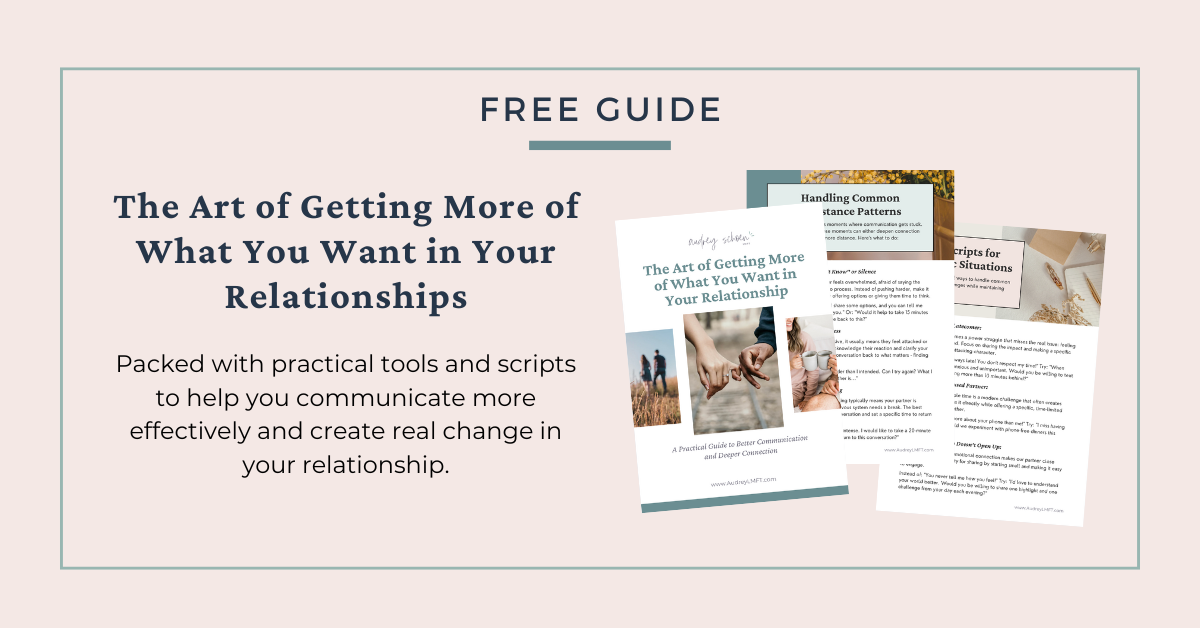
Plus, you'll get relationship tips, book & podcast recommendations, occasional updates, and more.
You can expect to receive about 1-4 emails per month.❤️